Pediatric Advanced Life Support (PALS)
Training & Certification
This course, provided by the American Heart Association, teaches healthcare professionals how to recognize and manage pediatric respiratory emergencies, shock, bradycardia, tachycardia, and cardiac arrest. Students will develop the skills needed to assess critically ill infants and children and provide effective, team-based resuscitation care.
The AHA PALS Course is a comprehensive and advanced training program designed for healthcare professionals who care for infants and children in emergency situations. Developed by the American Heart Association, this course equips participants with the knowledge and confidence to recognize and manage pediatric respiratory emergencies, shock, and cardiac arrest. Through hands-on practice and team-based scenarios, students learn to make informed decisions and provide high-quality pediatric advanced life support. Upon successful completion of this course, students will receive a PALS certification from the American Heart Association that is valid for 2 years.
Need this training for your group?
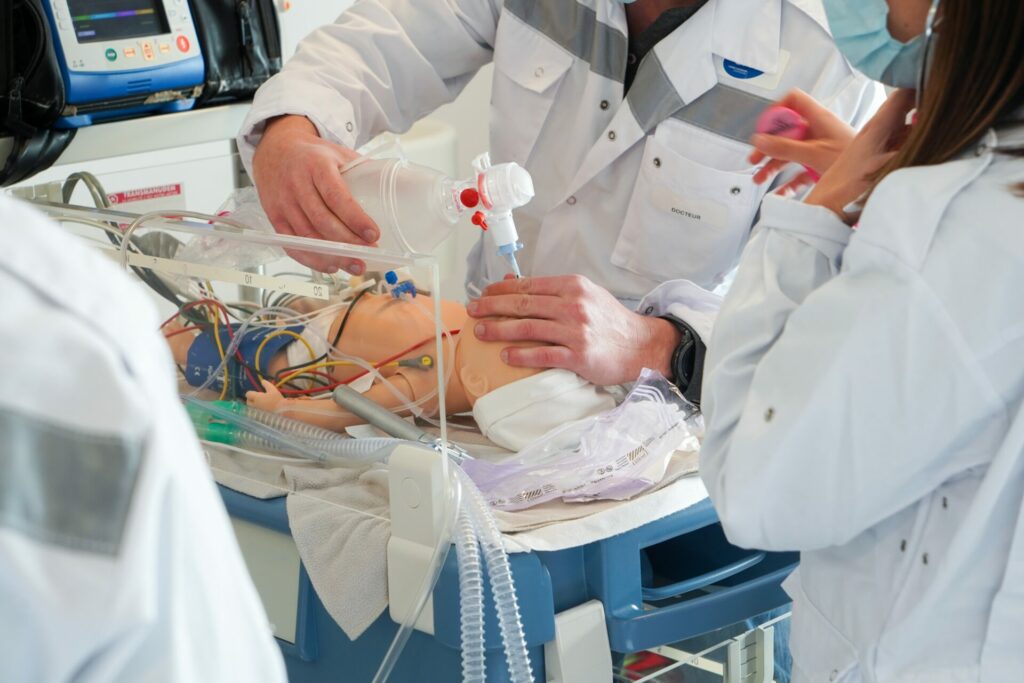
PALS Certification
PALS Certification
Length
Varies
Certification
2 years
Audience
Healthcare
Format
In-person • Online
Choose your course option:
Upcoming PALS Skills Session Dates
Choose Your PALS Renewal Class Date

Trusted & Recognized, AHA Provider courses
Certification recognized and required by leading healthcare employers
Evidence-based training backed by the AHA's latest 2025 science updates
Get your card the same day you complete training
Easy & Flexible Scheduling
We offer weekday, evening, and weekend classes so you can train on your terms—with options that fit into even the busiest schedule.
Expert Instructors
Our instructors are certified professionals with real-world experience and a focus on practical, effective training.
Locally-Owned,
Community Focused
We're not a franchise. We live here, train here, and care that you’re ready.
Small Business.
Big Commitment
Trusted across the region for CPR and First Aid training that’s clear, hands-on, and always student-focused.
The best CPR training gives you calm in the chaos.
Learn it clearly. Remember it easily. Use it confidently.
PALS FAQ
Pediatric Advanced Life Support (PALS) is an advanced certification course from the American Heart Association that teaches healthcare professionals how to recognize and manage life-threatening emergencies in infants and children, including respiratory distress, shock, and cardiac arrest. PALS certification is valid for 2 years.
PALS is intended for healthcare professionals who care for infants and children in emergency, critical care, or acute care settings. This includes physicians, nurses, paramedics, respiratory therapists, and other providers who may be involved in pediatric resuscitation or emergency response.
PALS certifications last for two years. After this period, individuals need to take a recertification course to renew their certification.
A PALS class covers the recognition and management of pediatric respiratory emergencies, shock, bradycardia, tachycardia, and cardiac arrest. Students also learn high-quality CPR, effective team dynamics, systematic patient assessment, and advanced life support interventions for infants and children.
Yes. To earn your American Heart Association PALS certification, you must successfully complete a written exam and demonstrate proficiency in the required skills and pediatric resuscitation scenarios. Unless completing Heartcode PALS with a skills session in which no written test is required.
Yes. PALS training includes hands-on skills assessments where students demonstrate competency in pediatric resuscitation techniques, team-based emergency response, and the management of respiratory and cardiac emergencies involving infants and children.
The PALS Megacode is a hands-on testing scenario in which students demonstrate their ability to assess and manage a pediatric emergency using PALS algorithms. During the Megacode, students must recognize the patient’s condition, make appropriate treatment decisions, and lead or participate in an effective resuscitation team response.
Traditional in-person PALS classes require significant instructor time, equipment, and hands-on practice. To provide an effective learning experience and keep costs reasonable, these classes are offered exclusively for groups. Individual students can still complete PALS certification through our HeartCode PALS blended learning option, which combines online coursework with an in-person skills session.